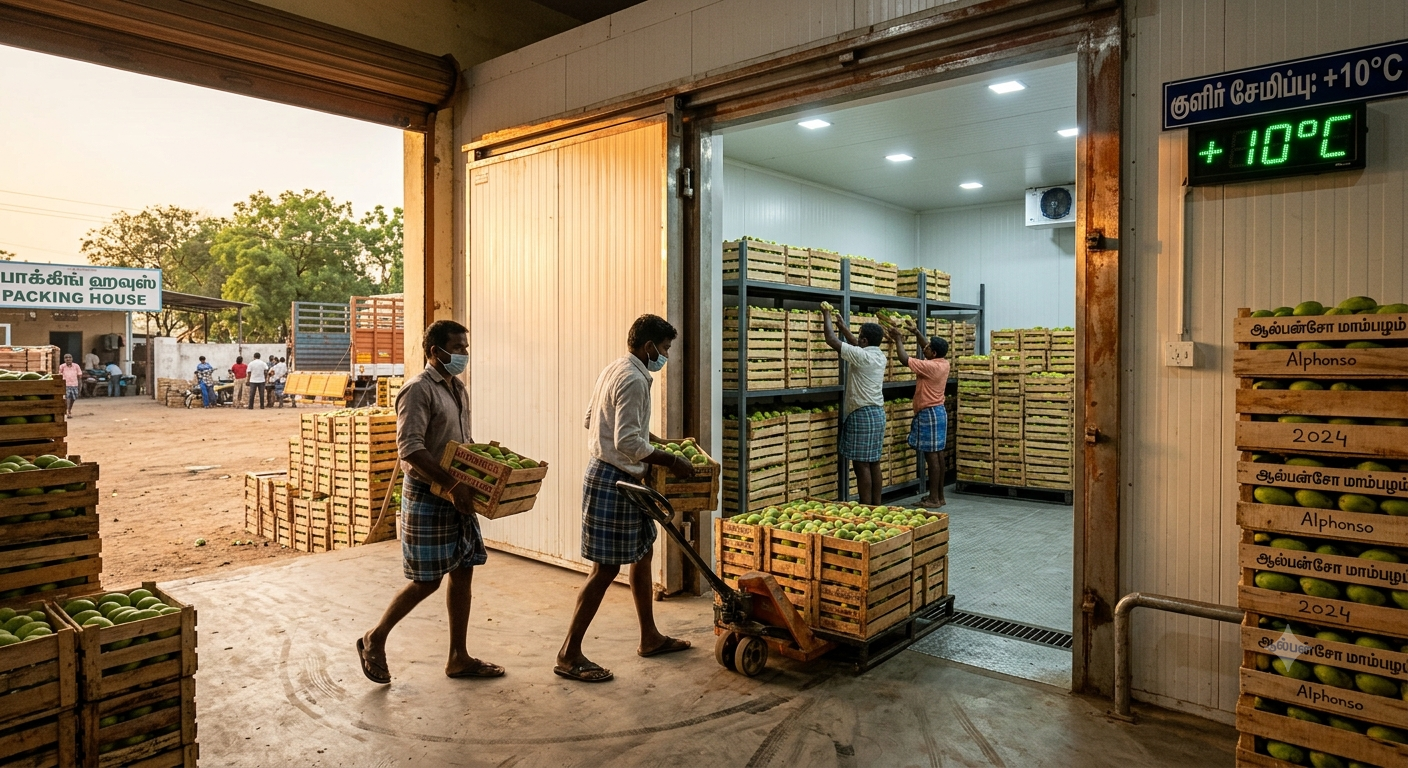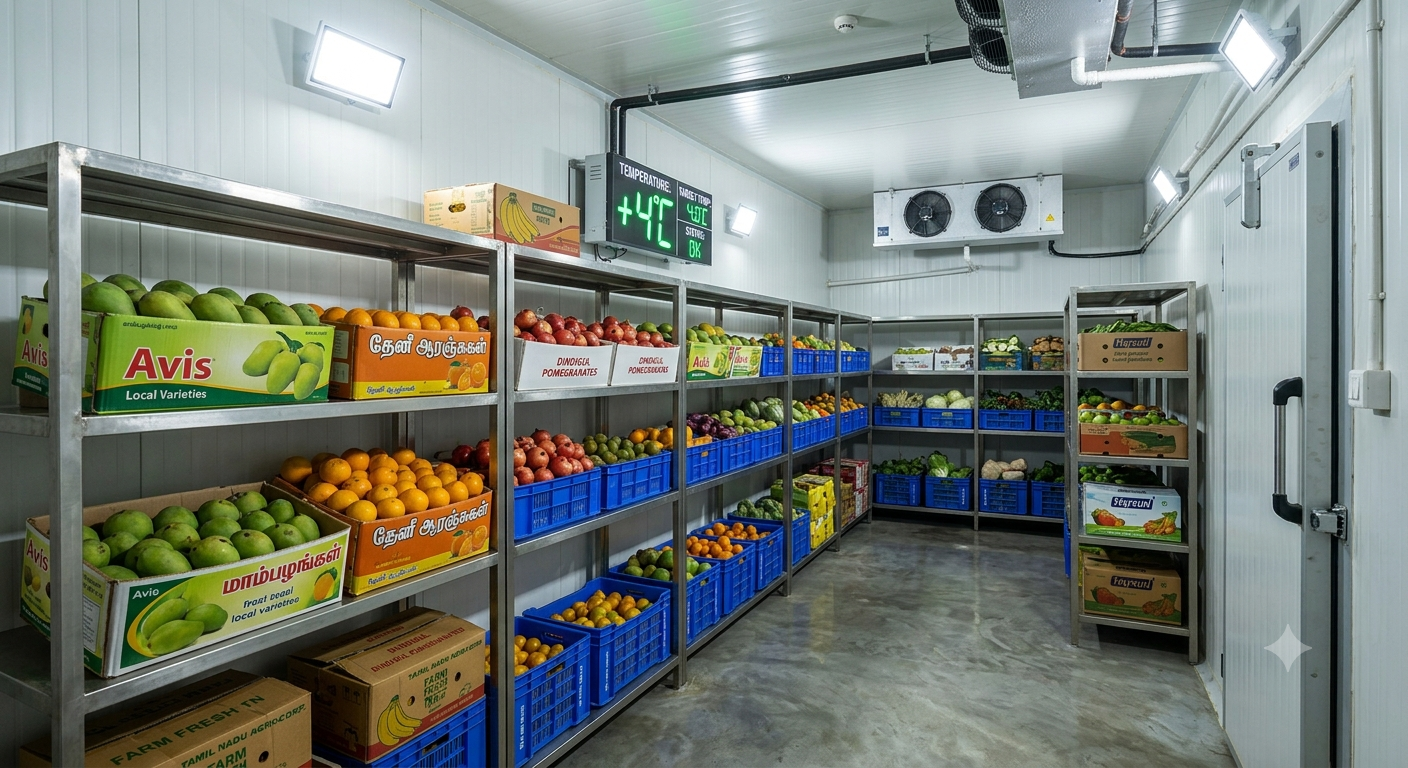
Tamil Nadu loses an estimated 20 to 30 percent of its fruit and vegetable production to post-harvest losses every year. The majority happen in the first 24 to 72 hours after harvest — before produce even reaches the consumer — simply because there is no cold room available to slow respiration, ripening, and bacterial growth that begin the moment a fruit or vegetable is separated from the plant. This is not a farming problem. It is a cold chain problem. And it is entirely solvable.
As a cold room manufacturer serving Tamil Nadu's agriculture sector, we build post-harvest cold storage rooms, controlled atmosphere ripening chambers, and farm-gate pre-cooling systems for banana traders in Coimbatore, mango exporters in Dindigul and Salem, vegetable cooperatives in Erode and Namakkal, grape exporters in Dindigul, and flower producers across the state. We have helped Tamil Nadu fruit traders move from distress local market selling at ₹15 to 20 per kg to organised retail supply at ₹35 to 50 per kg — not by changing the product, but by giving them control over when and how it reaches the market. The economics of agricultural cold storage are compelling and fast. A banana ripening chamber enabling uniform, schedule-based ripening for supermarket supply typically pays for itself in 8 to 14 months. A post-harvest cold storage for mango that lets a trader hold 50 tonnes through the peak-supply price crash and release 3 weeks later at 40 percent higher prices can pay for itself in a single season.
These are the refrigeration and cold chain problems that cost Agriculture & Fruits businesses money every year — and what happens when they go unsolved.
| Challenge | Business Impact if Not Solved |
|---|---|
| Distress selling within 24 to 48 hours of harvest | Without a cold room, freshly harvested produce must be sold immediately regardless of market price — forcing distress sales to local commission agents with no bargaining power. |
| Uneven fruit ripening for banana and mango | Without a controlled ripening chamber, fruits ripen unevenly — some ready to eat, others still green. This prevents grading, forces bulk selling, and eliminates the retail premium for consistent quality. |
| Seasonal price crashes for onion, potato, and tomato | Peak harvest floods local markets and crashes prices. Cold storage holders sell 3 to 8 weeks later at significantly higher prices — a difference that often exceeds the entire cold room cost in one season. |
| Inability to supply organised retail chains | Modern trade retailers require consistent supply and predictable delivery schedules. Without cold storage and ripening chambers to control timing and quality, farmers cannot access the highest-margin sales channel. |
| High post-harvest losses of 20 to 30 percent | Produce deterioration, bruising, over-ripening, and fungal infection during storage and transit account for 20 to 30 percent losses in Tamil Nadu's horticultural supply chain. |
| No export-quality post-harvest handling | Export markets require pre-cooled, temperature-maintained, and documented produce. Without post-harvest cold rooms, Tamil Nadu growers are excluded from export premiums — 2 to 3 times domestic prices. |
Controlled ethylene ripening for banana, mango, and tropical fruits. Uniform ripening in 3 to 5 days on a predictable retail supply schedule.
View DetailsBulk post-harvest storage for banana, mango, onion, potato, tomato, grapes, and vegetables. Multi-temperature zones available.
View DetailsFarm-gate and packing house cold rooms for pre-cooling freshly harvested produce before grading, sorting, and packaging.
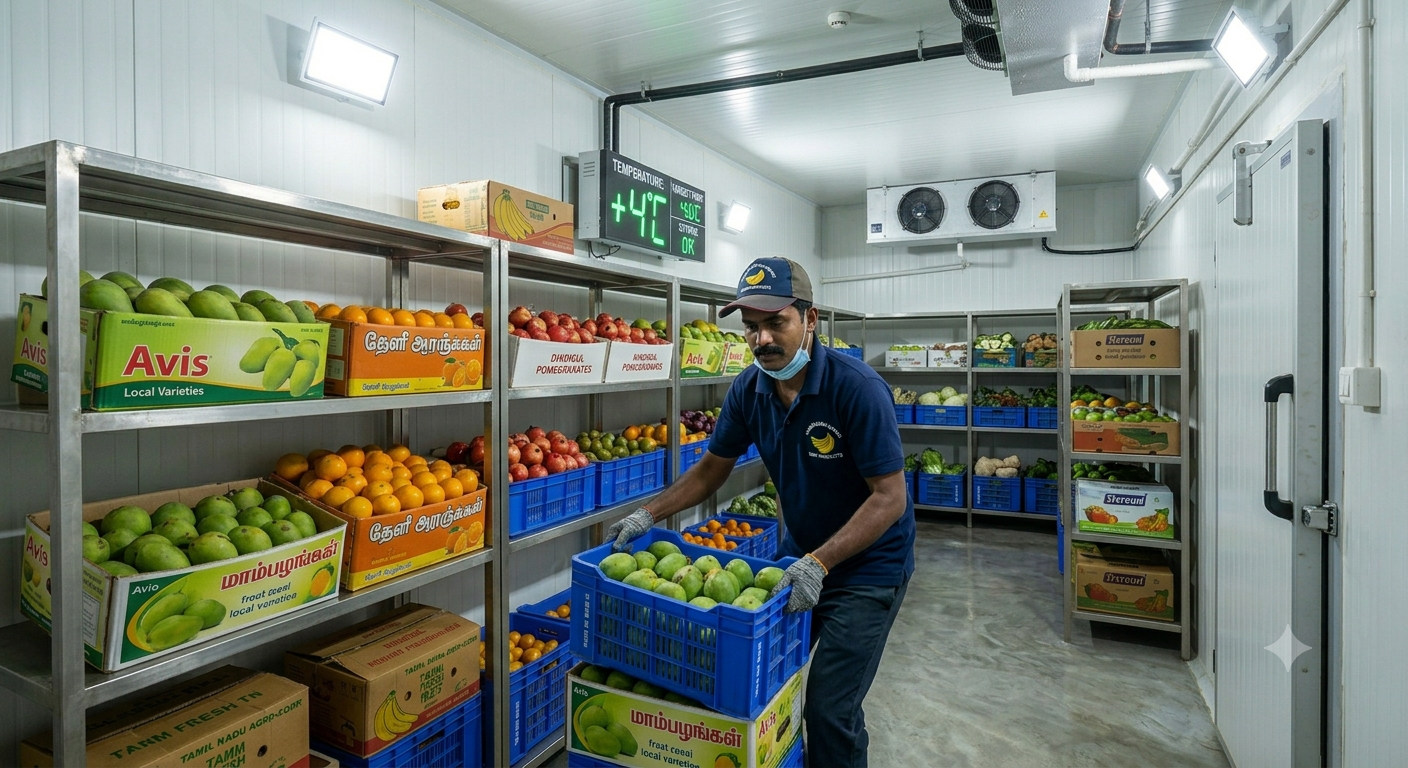
View DetailsShort-term fresh produce staging at packing house or distribution centre before retail delivery.
View DetailsModular cold rooms deployable at farm locations or cooperative facilities without complex civil construction.
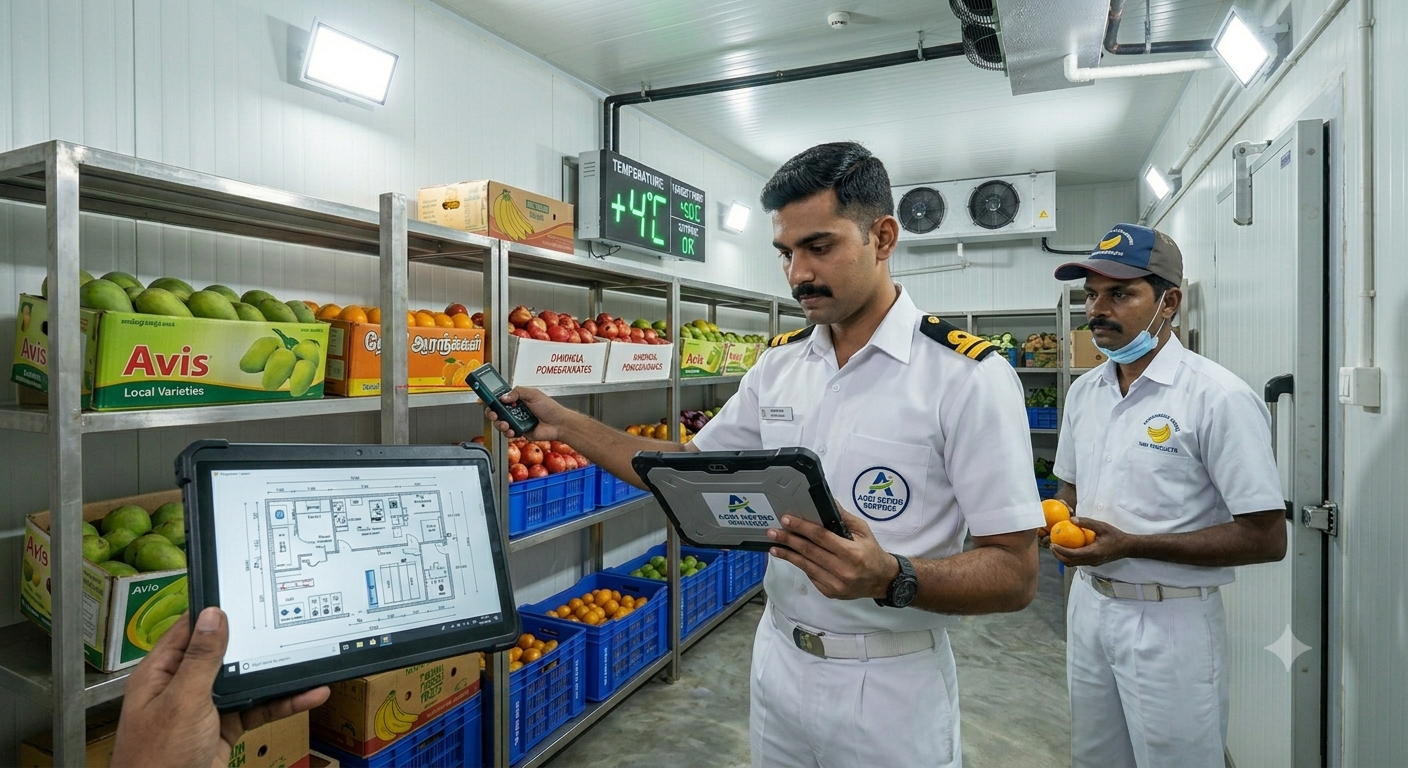
View DetailsWe have built cold rooms for the Agriculture & Fruits industry across Tamil Nadu for over 30 years. We know your regulatory requirements, your product specifications, and what your auditors look for. We engineer cold rooms for your industry from the ground up — not adapted from a generic product.