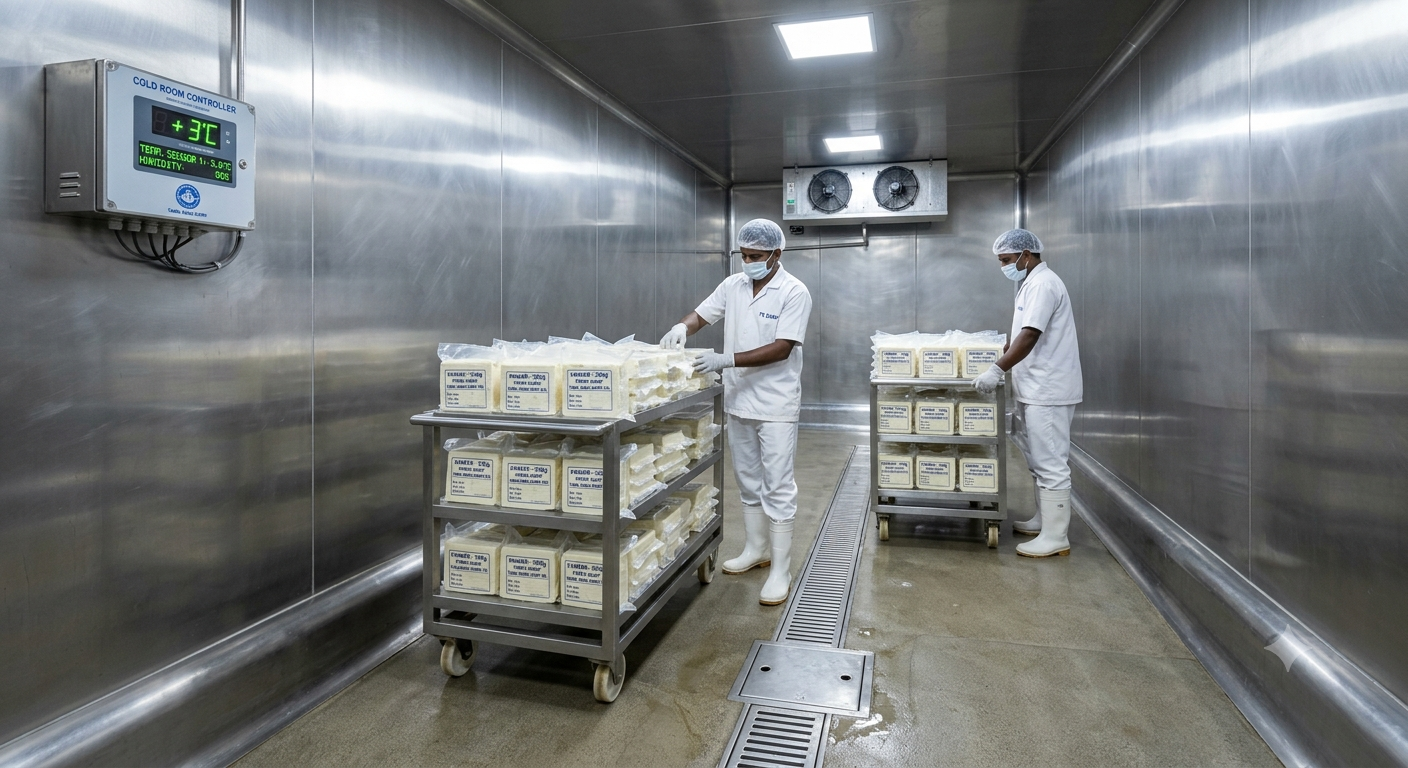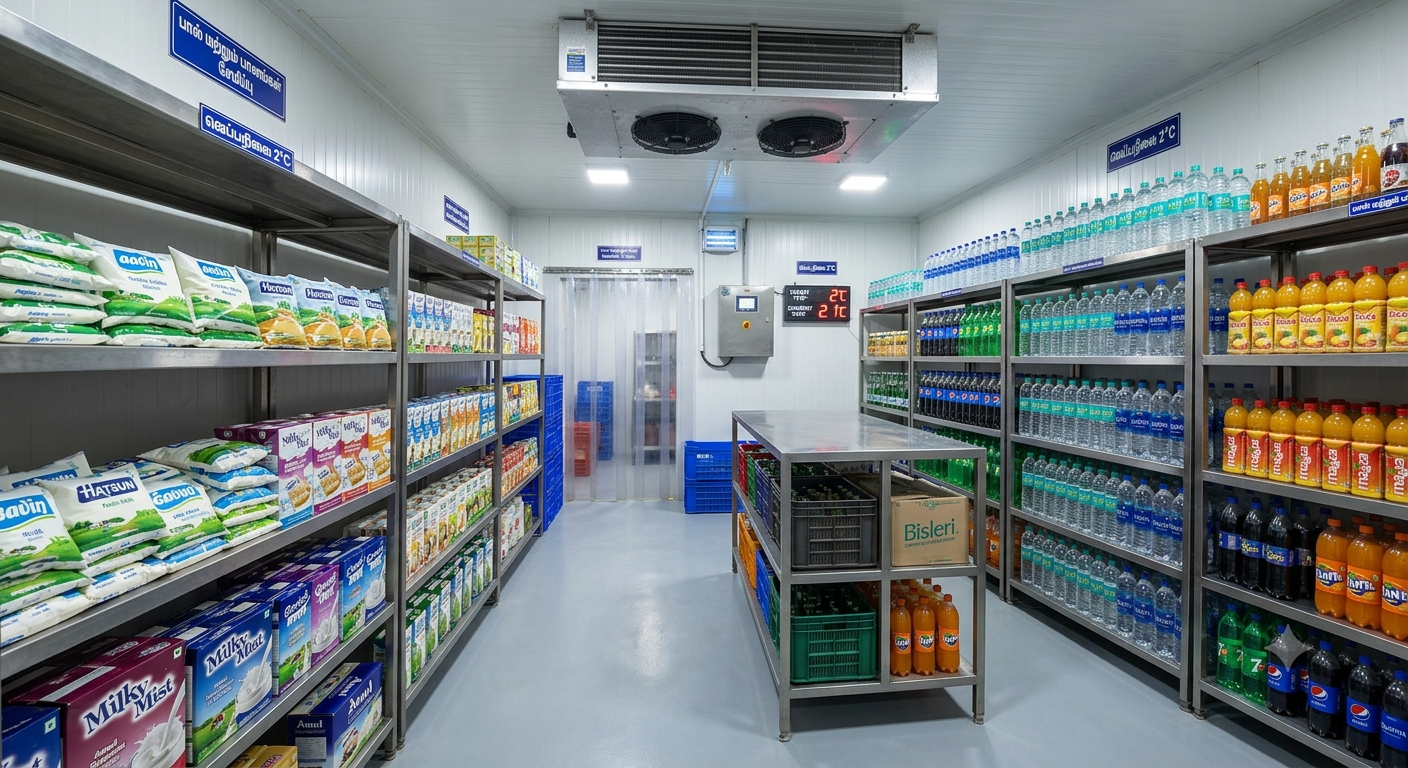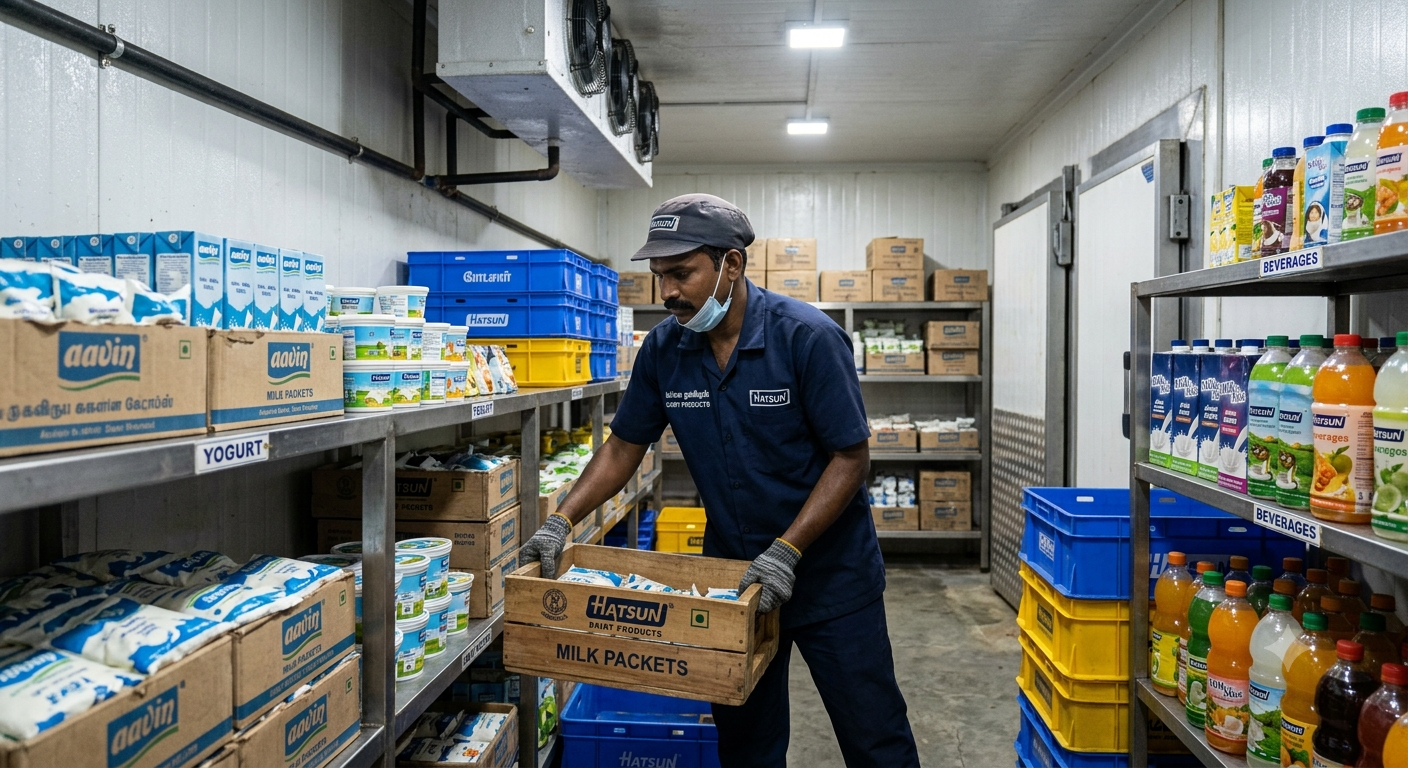
Dairy is the most temperature-sensitive food category in Tamil Nadu’s food chain. Milk begins deteriorating above +4°C. Paneer and curd lose shelf life at a rate that doubles for every degree above their target storage temperature. Fresh juice oxidises within hours of leaving the target temperature range. In Tamil Nadu’s climate — where ambient temperatures regularly exceed 40°C in summer — the cold room in your dairy operation is the single biggest determinant of product quality, shelf life, and your ability to supply modern trade retailers who temperature-test incoming stock at their receiving docks.
As a cold room manufacturer with multiple dairy cold room installations across Tamil Nadu, we understand the specific engineering demands of dairy refrigeration that most suppliers overlook. Dairy cold rooms experience the highest door-cycle frequency of any application — opened dozens of times per shift as workers retrieve ingredients and finished product. Dairy processing chemicals used for HACCP washdown corrode standard GI interiors within 18 to 24 months. Paneer and curd freeze at −1°C — a cold room with poor temperature uniformity will damage delicate dairy products even when the main sensor reads +3°C. We have built chiller rooms for milk processing plants in Coimbatore, paneer manufacturers in Salem, curd and yogurt producers in Madurai, juice bottling plants in Chennai, and dairy cooperatives across Tamil Nadu. Every dairy cold room is designed for your specific product mix, your FSSAI and HACCP requirements, and your production throughput.
These are the refrigeration and cold chain problems that cost Dairy & Beverages businesses money every year — and what happens when they go unsolved.
| Challenge | Business Impact if Not Solved |
|---|---|
| Temperature rise from high-frequency door access | Dairy cold rooms opened dozens of times per shift introduce warm air continuously. An undersized refrigeration system gradually loses the battle — and your paneer shelf life drops from 7 days to 3 days without a visible sign of why. |
| GI interior corrosion from cleaning chemicals | HACCP-compliant dairy facilities use alkaline and acidic cleaning agents. Standard galvanised steel interiors corrode within 18 to 24 months — creating rust contamination that fails FSSAI and buyer hygiene audits. |
| Cold spots freezing paneer and curd below 0°C | A cold room with poor airflow design may have cold spots near the evaporator even when the main sensor reads +3°C — freezing and permanently damaging batches of high-value paneer and curd. |
| Milk intake temperature too high at receiving | Incoming milk must reach below +5°C within 2 hours per FSSAI dairy guidelines. Inadequate pre-cooling fails this window — allowing bacterial multiplication before pasteurisation begins. |
| Cross-contamination between raw and pasteurised zones | Storing raw milk and pasteurised finished products in the same cold room creates cross-contamination risk and fails FSSAI dairy hygiene standards. |
| Cold room capacity insufficient for seasonal demand peaks | Dairy businesses have strong seasonal peaks during festivals and summer. Cold rooms sized for average demand become bottlenecks during peak season. |
Primary dairy chilling and storage for milk, paneer, curd, cheese, and cream. High door-cycle rated, SS304 interior, coved floor junctions.
View DetailsBulk dairy ingredient and finished goods cold room with pallet truck access. Stainless steel interior.
View DetailsRapid chilling of pasteurised dairy from processing temperature to +3°C within 90 minutes — HACCP compliance.
View DetailsLong-term frozen storage for butter, ghee, ice cream base, and frozen dairy ingredients at −18°C to −22°C.
View DetailsMulti-chamber dairy cold storage with separate raw intake, pasteurised product, and packaging zones.
View DetailsWe have built cold rooms for the Dairy & Beverages industry across Tamil Nadu for over 30 years. We know your regulatory requirements, your product specifications, and what your auditors look for. We engineer cold rooms for your industry from the ground up — not adapted from a generic product.