Cold Rooms for Seafood & Fisheries Industry in Tamil Nadu — MPEDA-Compliant Blast Freezers & Corrosion-Resistant Cold Rooms

Manufactured in Coimbatore. 500+ Installations Across Tamil Nadu. Free Site Visit — 48 Hours.

Get Instant Quote
500+ InstallationsSouth India Wide
Free Site VisitWithin 48 Hours
1-Year WarrantyAll Components
7–10 Day InstallTamil Nadu Wide

Cold Chain Engineering for the Seafood & Fisheries Industry

Seafood is the most perishable commodity in any supply chain. A kilogram of fresh shrimp at +10°C develops significant bacterial load within 4 to 6 hours. A container of frozen seafood rejected by a European importer for improper freezing documentation means not just that shipment’s value — it means a deregistered export facility, a suspended buyer relationship, and months of regulatory remediation. In the seafood business, your cold room is not a support function. It is the reason your product is worth export price instead of local market price.

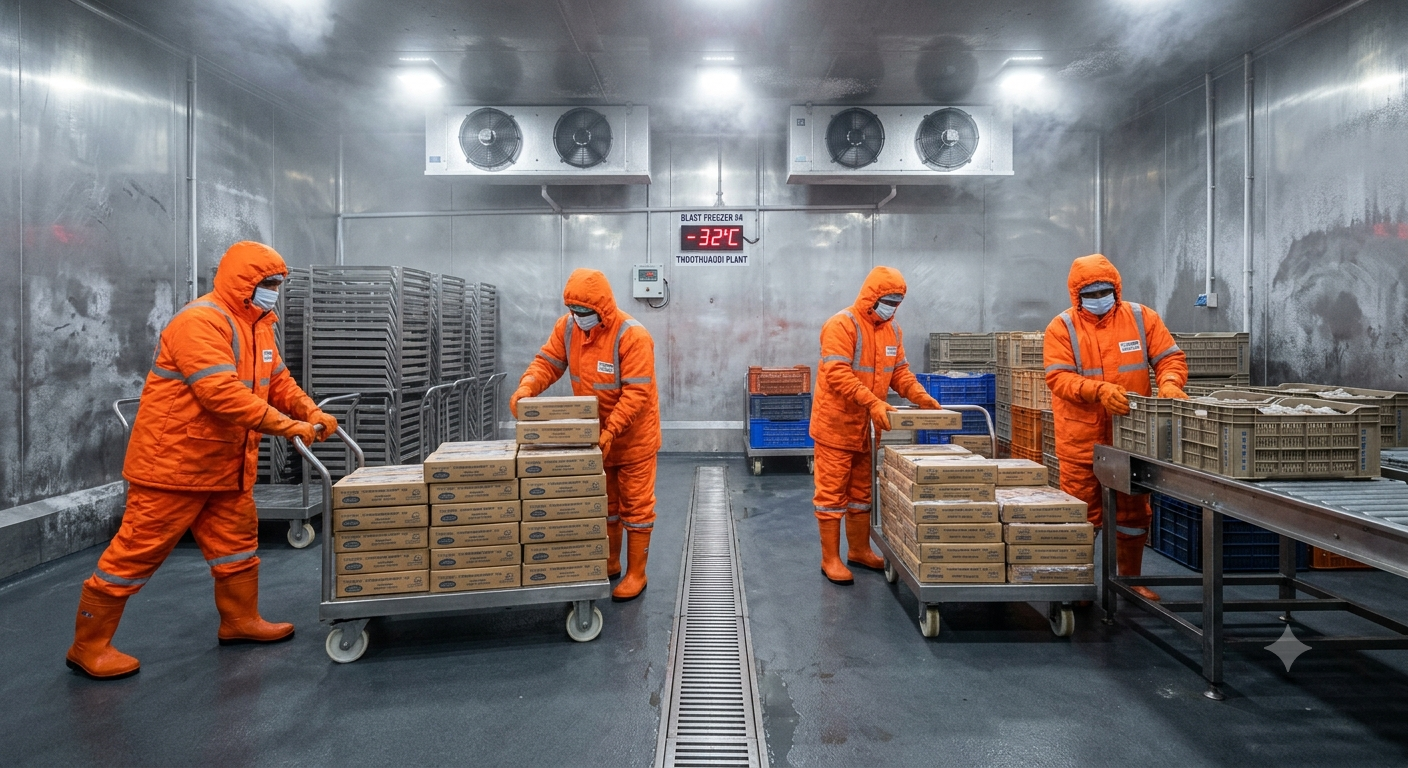
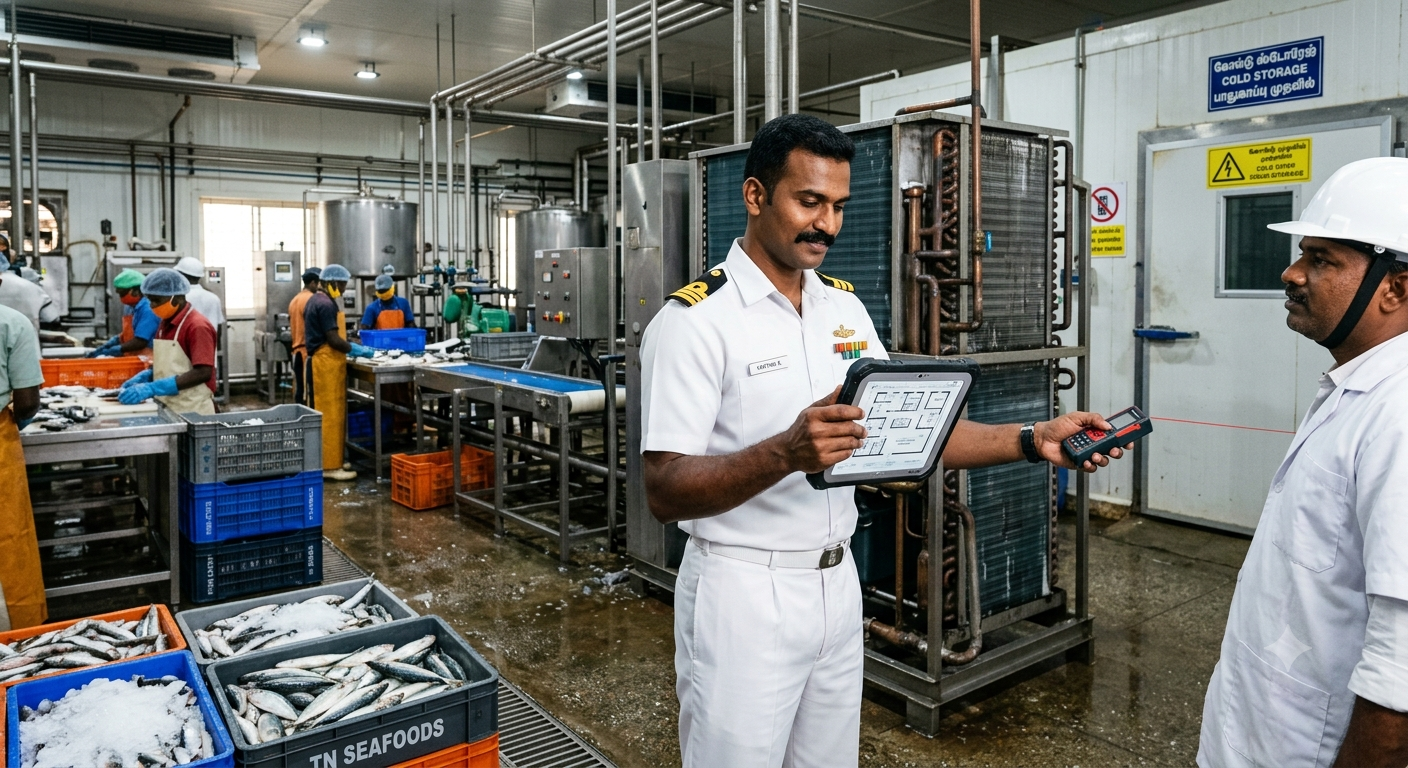
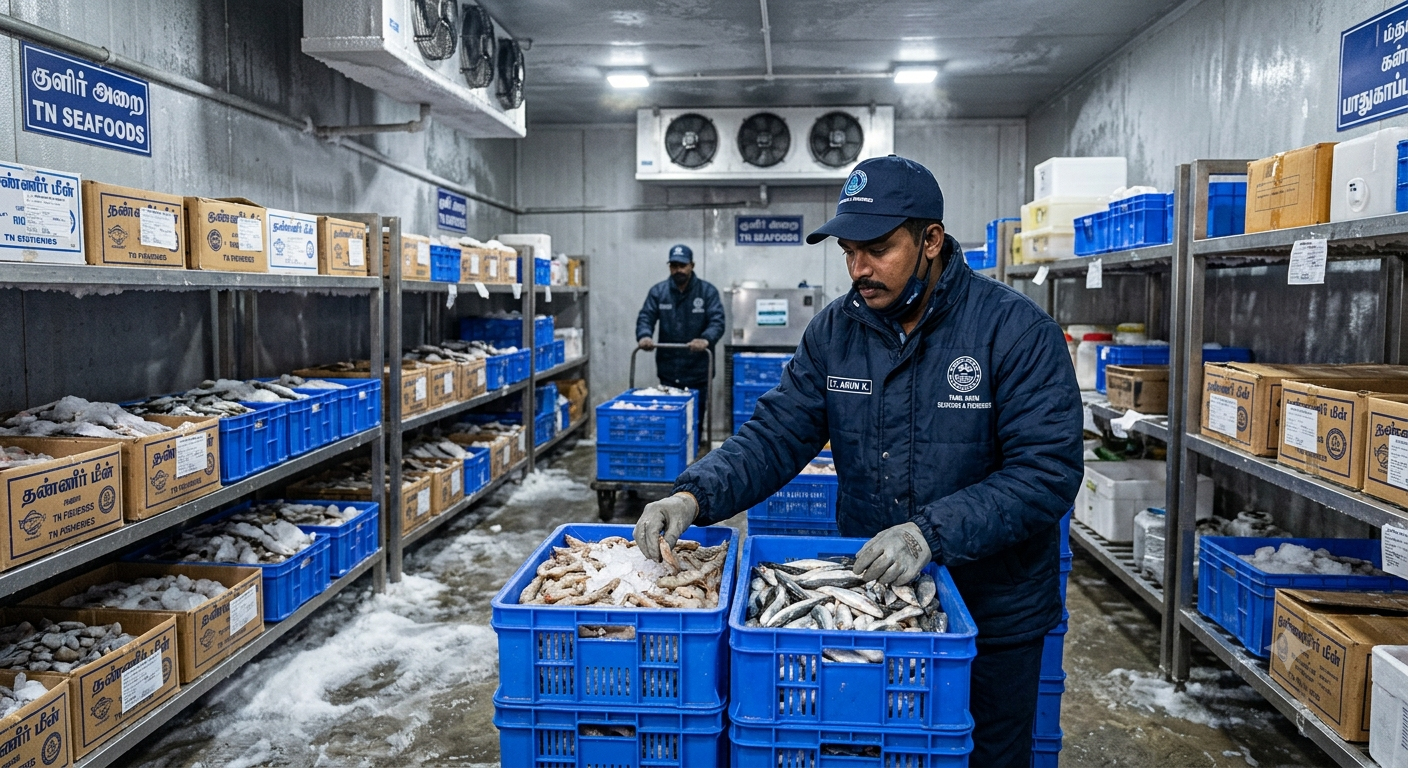
As a cold room manufacturer serving Tamil Nadu's seafood and fisheries sector — with installations in Thoothukudi, Ramnad, Chennai, Nagapattinam, and across the coastline — we build MPEDA-compliant blast freezers, deep freeze holding rooms, and corrosion-resistant chiller rooms for shrimp exporters, fish processors, and fish landing centres. Every seafood cold room starts with one question most cold room suppliers skip: what is the corrosive environment this room will operate in? Corrosion resistance is the defining engineering requirement for seafood cold rooms. Salt, fish oils, brine, and aggressive cleaning acids attack standard cold room materials within months in coastal Tamil Nadu. We use stainless steel SS304 or SS316 interior throughout, marine-grade hardware on all fittings, and fully insulated and protected refrigeration pipework. The result is a cold room that performs for 20 years — not one that begins deteriorating in year two.

Risk Mitigation

Cold Chain Challenges in the Seafood & Fisheries Industry

These are the refrigeration and cold chain problems that cost Seafood & Fisheries businesses money every year — and what happens when they go unsolved.

Challenge Business Impact if Not Solved
GI interior corrosion from salt and cleaning chemicals Standard GI cold room interiors corrode within 12 to 18 months in seafood facilities. Rust flakes contaminate product — resulting in MPEDA facility deregistration and export buyer rejections.
Blast freezer unable to document pull-down time MPEDA and EU/US import regulations require documented proof that product reached −18°C within a specified time. An under-specified blast freezer cannot produce this documentation — risking export facility deregistration.
Freezer room temperature recovery too slow after loading Loading freshly blast-frozen product at −10°C to −12°C spikes the room temperature. Systems without adequate pull-down capacity recover slowly — allowing outer layer product to partially thaw and refreeze, damaging quality.
Floor deterioration from forklift traffic and brine water Seafood cold room floors under constant brine and melt water heave, crack, and create MPEDA and HACCP failures within 2 to 3 years when not properly insulated and sealed.
No product thermocouple ports for export documentation Export buyers and MPEDA auditors require product core temperature records. Cold rooms without thermocouple ports cannot produce this documentation — limiting access to premium export markets.
Cross-contamination between species in shared cold rooms Storing tiger prawns, fish, and squid together causes odour and flavour transfer. Premium tiger prawn products stored with fish lose their market premium.
Recommended Hardware

Recommended Cold Room Products for Seafood & Fisheries Industry

Blast Freezer Room

Primary seafood processing. Pull shrimp, fish, squid from +10°C to −18°C in 3 to 4 hours. SS304 interior, MPEDA compliant.

View Details
Deep Freezer Room

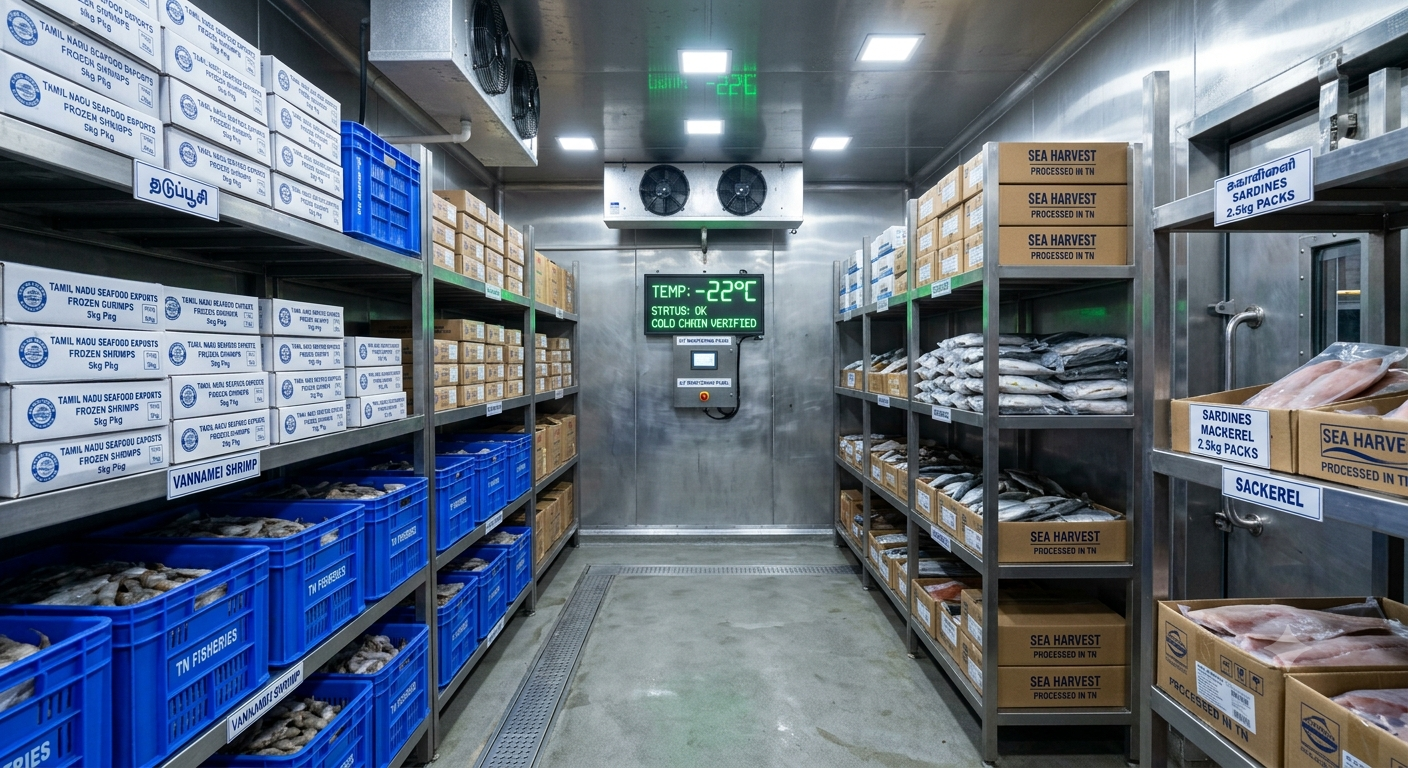
Long-term frozen holding at −18°C to −25°C before export dispatch. Tropical-rated for Tamil Nadu climate.

View Details
Freezer Room

Medium-term frozen seafood storage between blast freezing and container loading. Insulated floor, hot gas defrost.

View Details
Chiller Room

Fresh seafood holding before processing at 0°C to +2°C. Ice-slurry compatible, seamless floor drainage.

View Details
Cold Storage (Multi-Chamber)

Multi-species cold storage with separate chambers preventing cross-contamination and odour transfer.

View Details
Engineering Blueprints

Cold Room Design Requirements for Seafood & Fisheries Industry

MPEDA-compliant blast freezer — documented pull-down from ambient to −18°C within 4 hours
Stainless steel SS304 or SS316 interior — mandatory for seafood export facility compliance
Marine-grade hardware — hinges, handles, cam-locks, shelf brackets in SS or hot-dip galvanised
Epoxy-sealed floor with integrated drainage channel — waterproof, non-slip, HACCP compliant
High-capacity blast evaporator — sized for peak processing batch weight in kg per cycle
Product thermocouple ports — for core temperature documentation required by MPEDA and export buyers
Insulated PUF floor panels in freezer rooms — prevents cold bridging, floor condensation, and heave
Separate blast freezer and freezer room — blast freezer is a process room, not long-term storage
Temperature data logging — MPEDA, APEDA, EU/US import chain documentation
Full corrosion protection on external refrigeration components — pipework, condenser, brackets

Proven Partner

Why Seafood & Fisheries Businesses Across Tamil Nadu Choose Us

We have built cold rooms for the Seafood & Fisheries industry across Tamil Nadu for over 30 years. We know your regulatory requirements, your product specifications, and what your auditors look for. We engineer cold rooms for your industry from the ground up — not adapted from a generic product.

Frequently Asked Questions

MPEDA and EU/US import standards require frozen seafood maintained at −18°C or below at all times after blast freezing. Core temperature documentation is required. Some premium markets (Japan, EU Grade A) specify −20°C or below for maintained storage.

MPEDA certification is mandatory for seafood export from India. It requires a blast freezer capable of rapid product freezing, freezer room storage at −18°C or below, temperature monitoring and data logging, HACCP food safety documentation, and hygienic construction of all cold rooms. We have supplied cold rooms to MPEDA-certified facilities across Tamil Nadu.

Seafood environments combine salt brine, fish oils, ice melt water, and acid-based cleaning chemicals — all of which corrode GI interiors within 12 to 18 months. Rust contamination in a seafood cold room causes product rejection at export quality checks and MPEDA audit failures. SS304 withstands all standard seafood processing chemicals.

Individually loaded unpackaged shrimp at +10°C initial temperature typically reach −18°C core in 2.5 to 4 hours. Block-frozen shrimp in 2 kg IQF blocks take 4 to 6 hours. We calculate pull-down time for your specific product and configuration during the quotation process.

A 200 sq. ft. blast freezer room with SS304 interior, −35°C pull-down capability, high-velocity evaporator, and product thermocouple ports starts from approximately ₹10 to 14 lakhs including installation. Contact us for a free site visit and itemised quotation.

Yes. We build chiller rooms and ice storage rooms for fish landing centres across Tamil Nadu's coastline. Landing centre cold rooms are designed for heavy forklift use, high brine water exposure, corrosion-resistant construction, and 24-hour continuous operation.

Yes. We design and install IQF blast tunnel systems for continuous-flow seafood processing — where product moves through a blast freezing tunnel on a conveyor belt and exits individually frozen. Used for shrimp, fish portions, squid rings, and other value-added seafood.

Every seafood cold room includes a 1-year comprehensive warranty. AMC packages include 4 scheduled maintenance visits, corrosion inspection and treatment, refrigerant check, compressor service, evaporator cleaning (essential in seafood environments), and 24-hour emergency breakdown response.

Yes. We have installations in Thoothukudi and serve all seafood processing facilities along Tamil Nadu's southern coastline. Our engineers are familiar with the MPEDA and EU approval documentation required for facility registration and renewal in Thoothukudi.

The solution is separate cold rooms or airtight storage zones with independent air circulation for different species. We design multi-chamber cold storage with independent temperature zones for each product category. If shared storage is unavoidable, sealed packaging of all product is the minimum requirement.

Request Quote

Please enter your company name.
Please provide a valid telephone line.
Please input a valid company email.
Please specify a target contact point.
Specify required volume blocks.
Select a valid delivery path window.
Please add basic blueprint details.