Cold Rooms for Dairy & Beverages Industry in Tamil Nadu — Precision Chilling for Milk, Paneer, Curd & Beverages

Manufactured in Coimbatore. 500+ Installations Across Tamil Nadu. Free Site Visit — 48 Hours.

Get Instant Quote
500+ InstallationsSouth India Wide
Free Site VisitWithin 48 Hours
1-Year WarrantyAll Components
7–10 Day InstallTamil Nadu Wide

Cold Chain Engineering for the Dairy & Beverages Industry

Dairy is the most temperature-sensitive food category in Tamil Nadu’s food chain. Milk begins deteriorating above +4°C. Paneer and curd lose shelf life at a rate that doubles for every degree above their target storage temperature. Fresh juice oxidises within hours of leaving the target temperature range. In Tamil Nadu’s climate — where ambient temperatures regularly exceed 40°C in summer — the cold room in your dairy operation is the single biggest determinant of product quality, shelf life, and your ability to supply modern trade retailers who temperature-test incoming stock at their receiving docks.

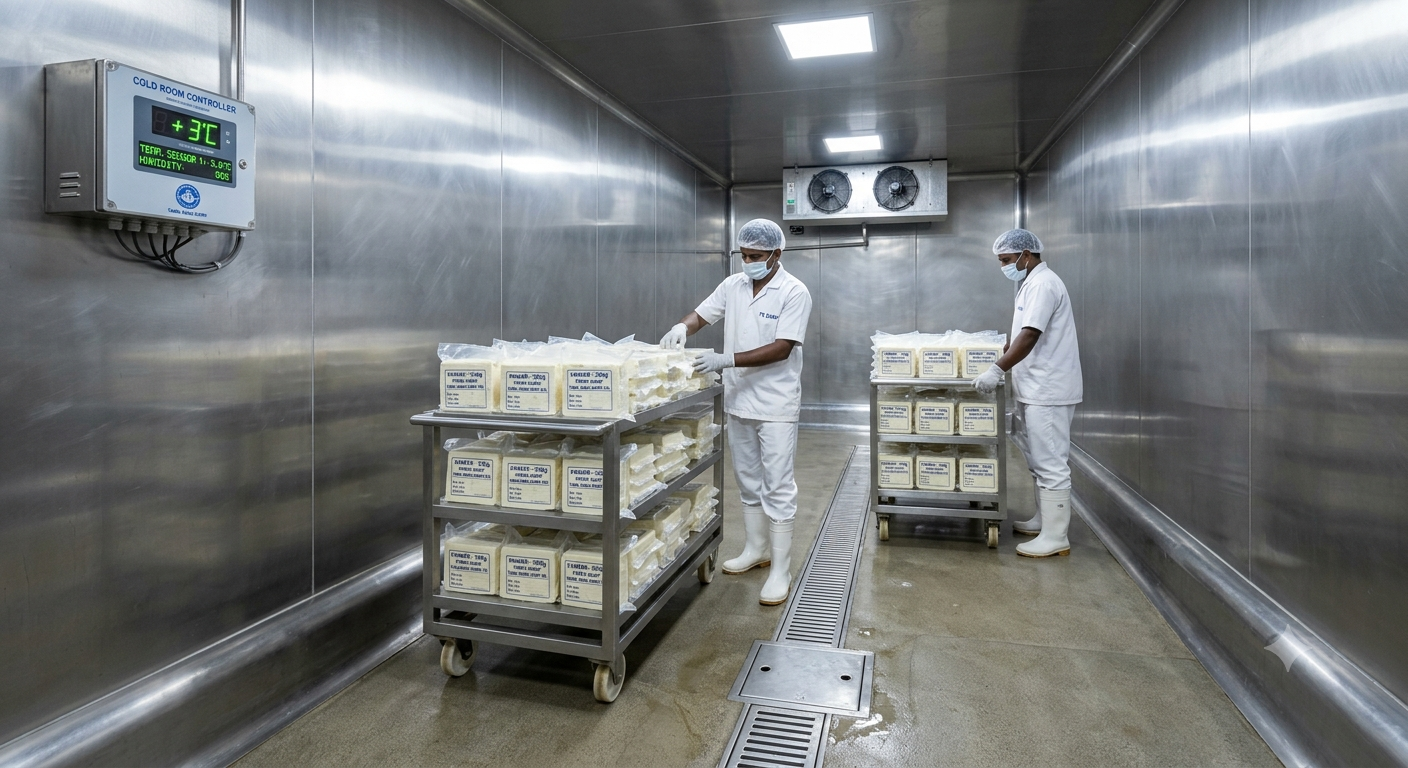
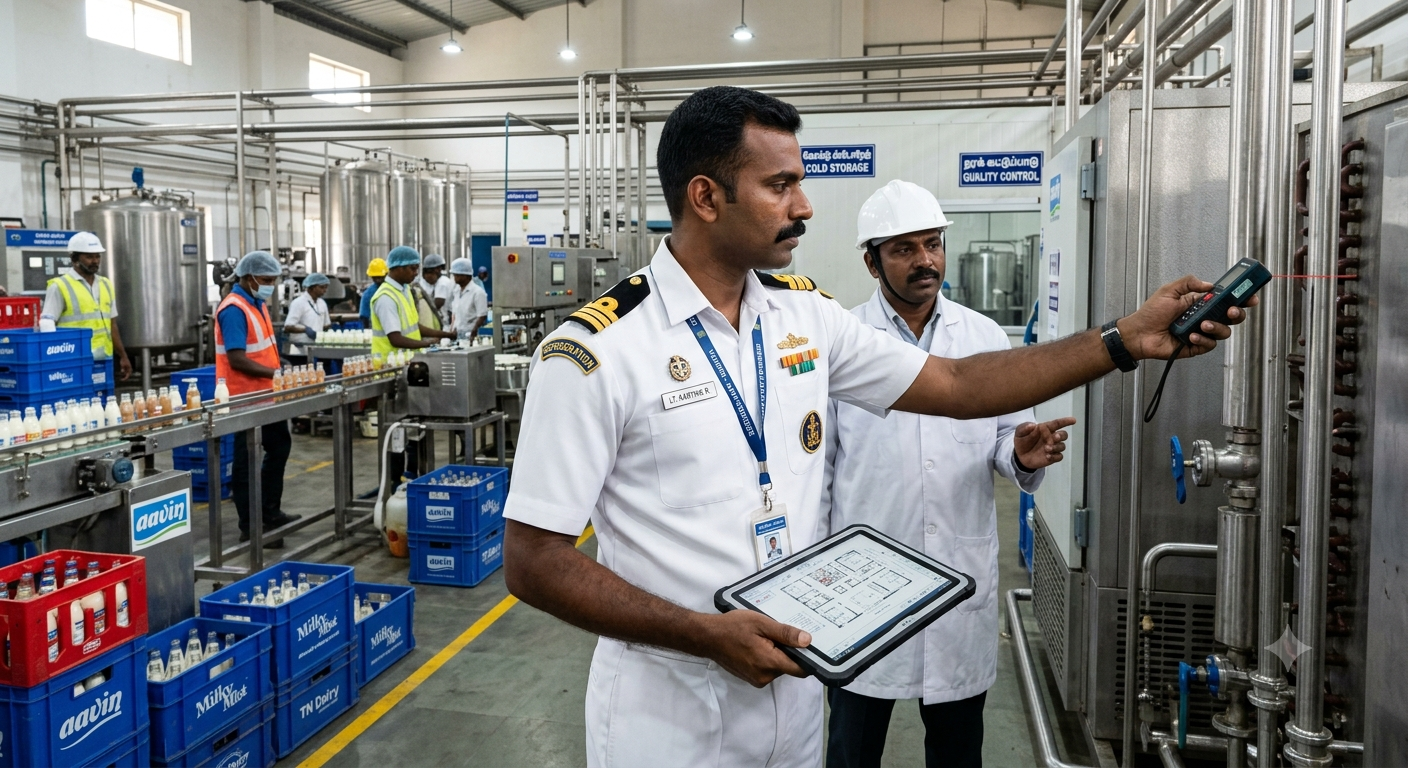
As a cold room manufacturer with multiple dairy cold room installations across Tamil Nadu, we understand the specific engineering demands of dairy refrigeration that most suppliers overlook. Dairy cold rooms experience the highest door-cycle frequency of any application — opened dozens of times per shift as workers retrieve ingredients and finished product. Dairy processing chemicals used for HACCP washdown corrode standard GI interiors within 18 to 24 months. Paneer and curd freeze at −1°C — a cold room with poor temperature uniformity will damage delicate dairy products even when the main sensor reads +3°C. We have built chiller rooms for milk processing plants in Coimbatore, paneer manufacturers in Salem, curd and yogurt producers in Madurai, juice bottling plants in Chennai, and dairy cooperatives across Tamil Nadu. Every dairy cold room is designed for your specific product mix, your FSSAI and HACCP requirements, and your production throughput.

Risk Mitigation

Cold Chain Challenges in the Dairy & Beverages Industry

These are the refrigeration and cold chain problems that cost Dairy & Beverages businesses money every year — and what happens when they go unsolved.

Challenge Business Impact if Not Solved
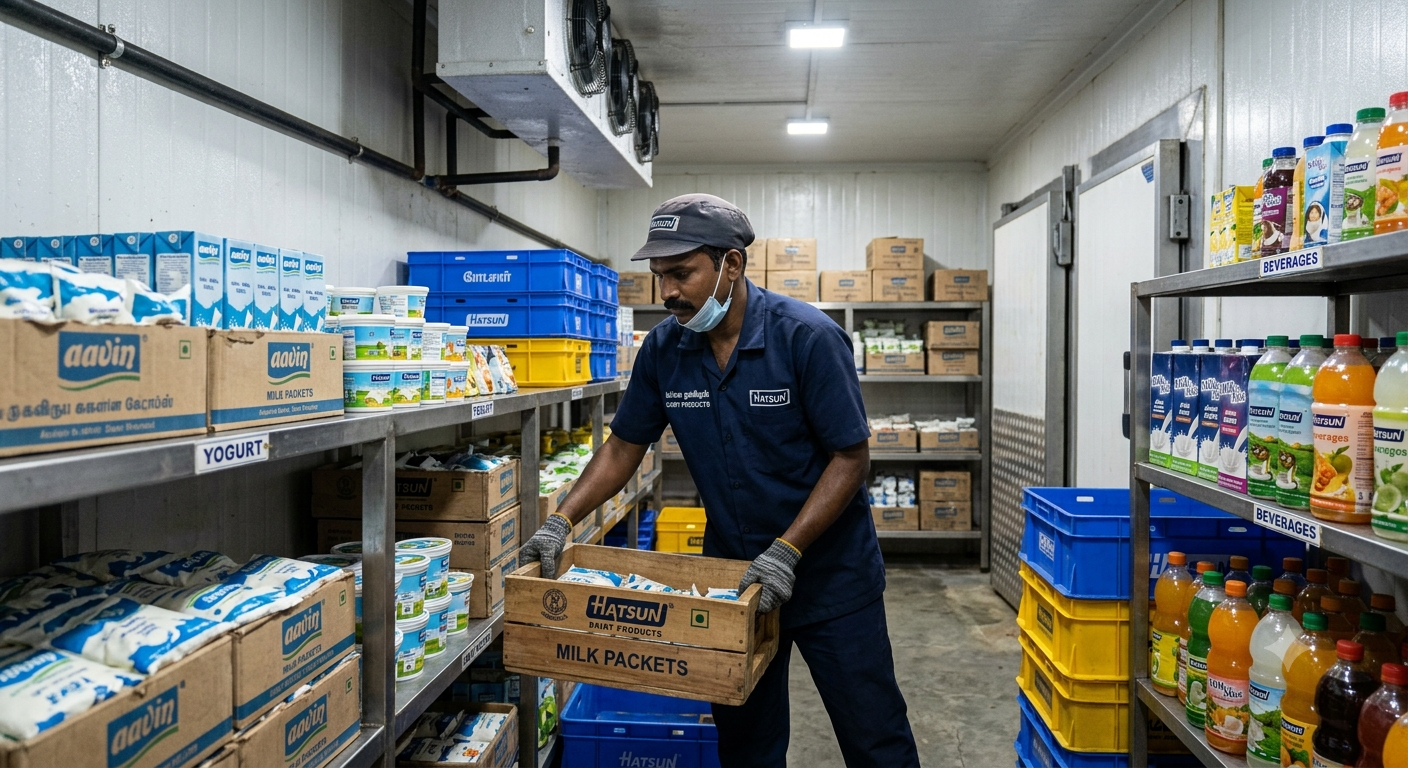
Temperature rise from high-frequency door access Dairy cold rooms opened dozens of times per shift introduce warm air continuously. An undersized refrigeration system gradually loses the battle — and your paneer shelf life drops from 7 days to 3 days without a visible sign of why.
GI interior corrosion from cleaning chemicals HACCP-compliant dairy facilities use alkaline and acidic cleaning agents. Standard galvanised steel interiors corrode within 18 to 24 months — creating rust contamination that fails FSSAI and buyer hygiene audits.
Cold spots freezing paneer and curd below 0°C A cold room with poor airflow design may have cold spots near the evaporator even when the main sensor reads +3°C — freezing and permanently damaging batches of high-value paneer and curd.
Milk intake temperature too high at receiving Incoming milk must reach below +5°C within 2 hours per FSSAI dairy guidelines. Inadequate pre-cooling fails this window — allowing bacterial multiplication before pasteurisation begins.
Cross-contamination between raw and pasteurised zones Storing raw milk and pasteurised finished products in the same cold room creates cross-contamination risk and fails FSSAI dairy hygiene standards.
Cold room capacity insufficient for seasonal demand peaks Dairy businesses have strong seasonal peaks during festivals and summer. Cold rooms sized for average demand become bottlenecks during peak season.
Recommended Hardware

Recommended Cold Room Products for Dairy & Beverages Industry

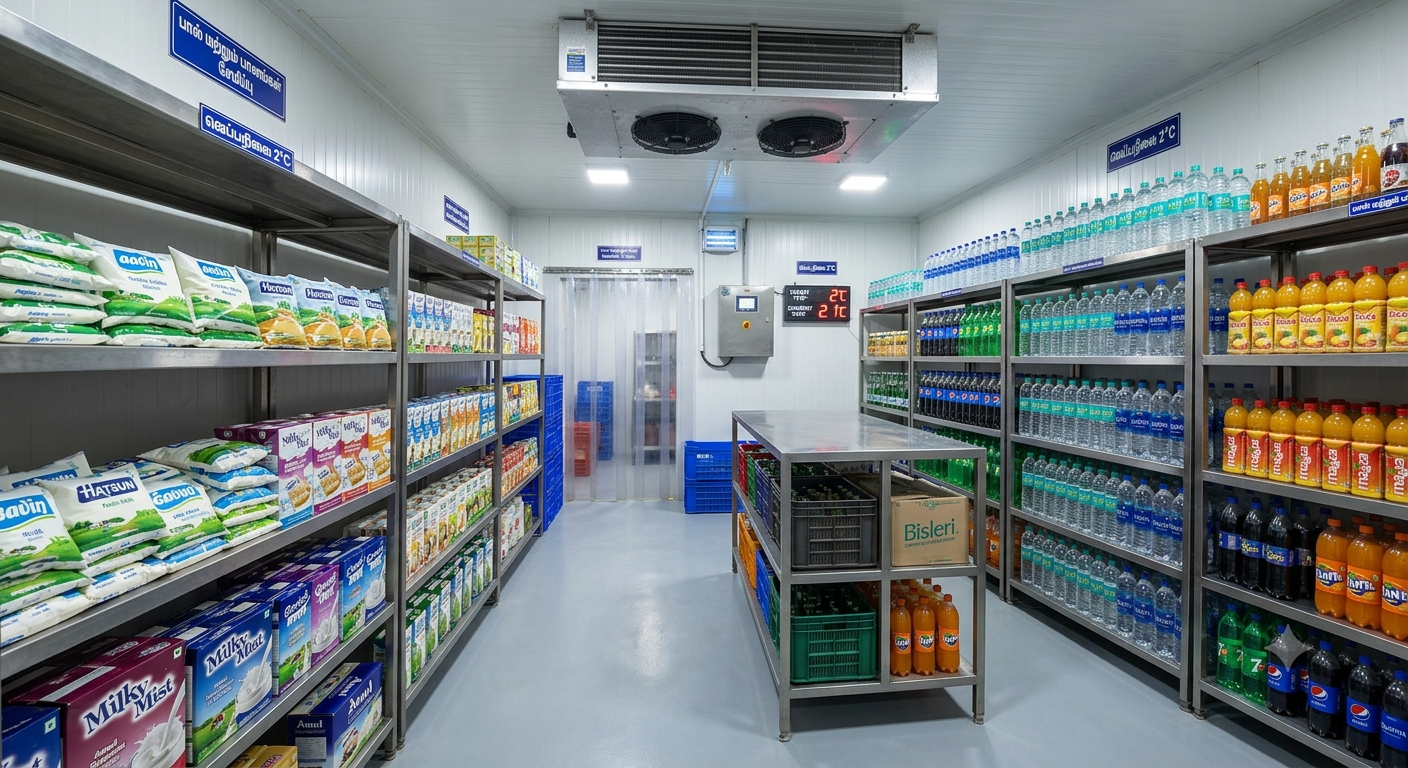
Chiller Room (0°C to +4°C)

Primary dairy chilling and storage for milk, paneer, curd, cheese, and cream. High door-cycle rated, SS304 interior, coved floor junctions.

View Details
Walk-In Cold Room

Bulk dairy ingredient and finished goods cold room with pallet truck access. Stainless steel interior.

View Details
Blast Chiller

Rapid chilling of pasteurised dairy from processing temperature to +3°C within 90 minutes — HACCP compliance.

View Details
Freezer Room

Long-term frozen storage for butter, ghee, ice cream base, and frozen dairy ingredients at −18°C to −22°C.

View Details
Cold Storage

Multi-chamber dairy cold storage with separate raw intake, pasteurised product, and packaging zones.

View Details
Engineering Blueprints

Cold Room Design Requirements for Dairy & Beverages Industry

Stainless steel SS304 interior — withstands alkaline and acidic cleaning chemicals for CIP
Coved wall-to-floor and wall-to-ceiling junctions — no crevices for bacterial build-up
Floor drainage channel inside cold room — for product spillage and high-pressure cleandown
Self-closing insulated door with hydraulic closer — rapid temperature recovery after each access
High door-cycle rated hinges — minimum 200,000 cycles for dairy processing workloads
Ceiling-mounted ducted evaporator — uniform temperature throughout, no cold spots
±0.5°C temperature accuracy controller — critical for paneer and curd to prevent freezing
FSSAI Schedule 4 compliant construction — hygienic design and approved materials
Separate cold rooms for raw and pasteurised products — HACCP cross-contamination prevention
Temperature data logging — for FSSAI dairy licence renewal and retail buyer compliance
Proven Partner

Why Dairy & Beverages Businesses Across Tamil Nadu Choose Us

We have built cold rooms for the Dairy & Beverages industry across Tamil Nadu for over 30 years. We know your regulatory requirements, your product specifications, and what your auditors look for. We engineer cold rooms for your industry from the ground up — not adapted from a generic product.

Frequently Asked Questions

Milk and liquid dairy: +1°C to +4°C. Paneer and fresh cheese: +2°C to +4°C — must not go below 0°C as it freezes permanently. Butter and cream: 0°C to +4°C short term, −18°C for long-term. Ice cream: −18°C to −22°C. Our engineer specifies the exact temperature for each product zone during the free site visit.

Dairy facilities use alkaline (caustic soda) and acidic (nitric acid) cleaning agents for CIP. Standard GI interiors corrode within 18 to 24 months — creating rust flakes that contaminate product and fail FSSAI and retail buyer hygiene audits. SS304 withstands all standard dairy cleaning chemicals and provides the non-porous surface that HACCP and FSSAI dairy standards require.

Paneer freezes at approximately −1°C. Prevention requires: uniform air distribution from a ceiling-mounted ducted evaporator (not a wall-mounted unit that creates cold spots), ±0.5°C controller accuracy, and no direct evaporator airflow onto product. Our airflow design eliminates cold spots systematically.

A 200 sq. ft. dairy chiller room with SS304 interior, high-cycle door, and floor drainage starts from approximately ₹7 to 9 lakhs including installation. SS304 interior adds 20 to 30 percent versus GI — but prevents corrosion failures at 18 to 24 months that would otherwise require full interior replacement.

Standard cold room doors are rated for 50 to 100 cycles per day. Dairy processing requires 200 to 500 cycles per day — which demands heavy-duty doors with high-cycle cam-lift hinges tested for 200,000+ cycles. Standard doors fail within 6 to 12 months under dairy processing frequency.

Yes. We have built cold rooms for village-level milk chilling centres, district dairy cooperatives, and regional dairy processing plants across Tamil Nadu. We offer government scheme-eligible designs (NDDB, NHM) and low-maintenance refrigeration systems operable by non-technical cooperative staff.

FSSAI Schedule 4 for dairy processing requires: raw milk storage at +5°C or below, pasteurised product cold rooms at 0°C to +4°C, hygienic interior construction (smooth, non-porous, cleanable), documented temperature records, and separation of raw and pasteurised product zones.

Yes. Our minimum cold room size is 50 sq. ft. All our dairy cold rooms regardless of size use SS304 interior and HACCP-compliant design. We do not have a minimum order value for site visits or quotations.

A 200 sq. ft. dairy chiller room at +2°C to +4°C in Tamil Nadu conditions typically consumes 10 to 18 units per day depending on door cycle frequency, product load, and ambient temperature. Our EC fan motor systems reduce consumption by 15 to 25% versus conventional units.

Yes. Our dairy AMC packages include 4 scheduled preventive maintenance visits per year, priority 24-hour breakdown response, refrigerant top-up, compressor check, door seal inspection, cleaning chemical compatibility check, and a maintenance report for FSSAI audit files. Available across all Tamil Nadu districts.

Request Quote

Please enter your company name.
Please provide a valid telephone line.
Please input a valid company email.
Please specify a target contact point.
Specify required volume blocks.
Select a valid delivery path window.
Please add basic blueprint details.