
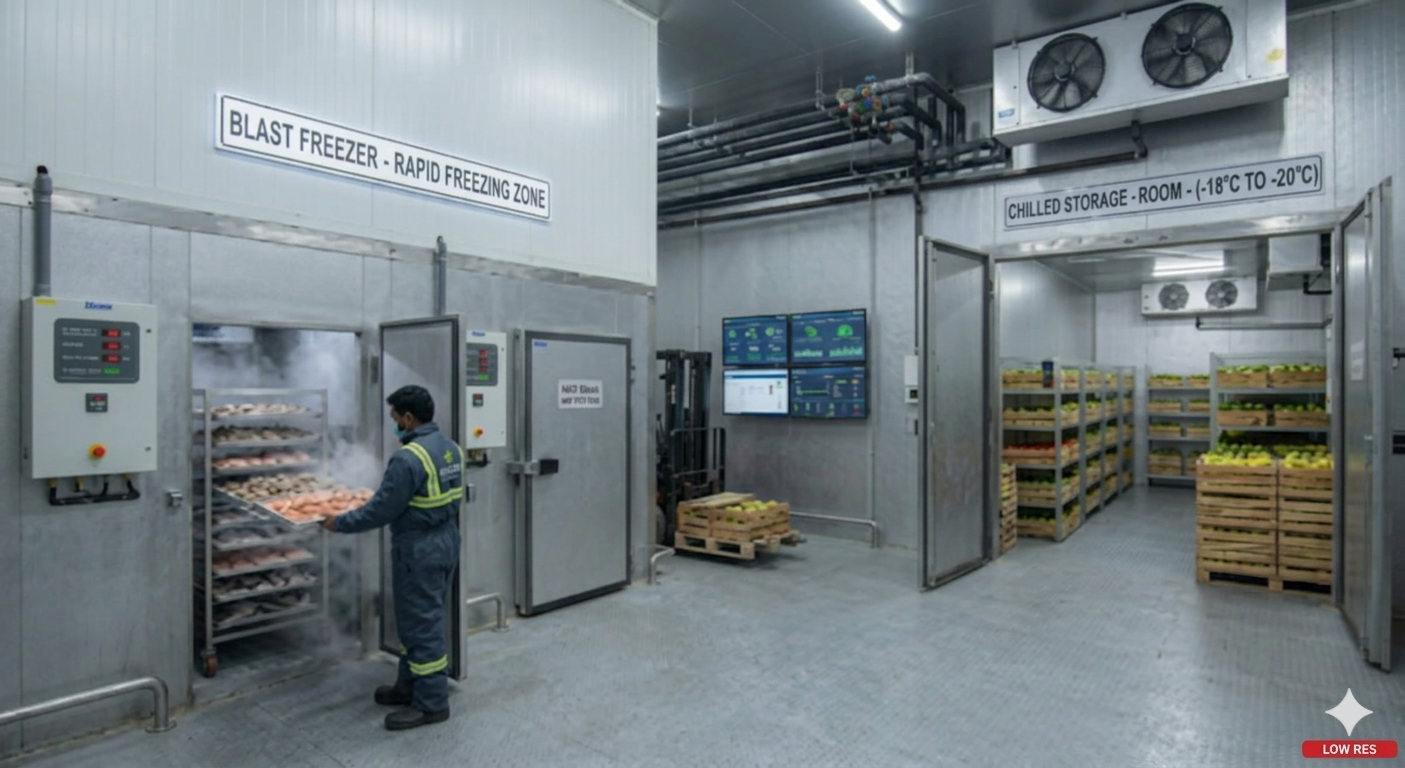
Blast freezers and cold rooms are two essential components of modern cold storage systems, widely used across industries such as food processing, agriculture, seafood, pharmaceuticals, and logistics. While both are designed to preserve perishable products, they differ significantly in function, temperature range, and application. For businesses in Madurai, understanding these differences is key to selecting the right solution for operational efficiency and product quality.
A blast freezer is designed for rapid freezing. It quickly lowers the temperature of products, typically to -18°C or lower, within a short period. This rapid freezing process prevents the formation of large ice crystals, which can damage the texture and quality of food. Blast freezers are commonly used for meat, seafood, ready-to-eat meals, and bakery products. By freezing products quickly, they lock in freshness, flavor, and nutritional value, making them ideal for industries that require high-quality preservation and long shelf life.
On the other hand, a cold room is primarily used for storage rather than rapid freezing. Cold rooms maintain a consistent temperature, usually ranging from 0°C to 10°C for chilled storage or lower for frozen storage. They are designed to store fruits, vegetables, dairy products, pharmaceuticals, and other temperature-sensitive goods over an extended period. Cold rooms focus on maintaining product quality rather than altering the state of the product.
One of the main differences lies in temperature control and speed. Blast freezers operate at extremely low temperatures and use high-velocity cold air circulation to freeze products quickly. In contrast, cold rooms maintain steady conditions and are not intended for rapid temperature changes. This makes cold rooms more energy-efficient for storage, while blast freezers are optimized for performance and speed.
Another important factor is application. Blast freezers are typically used at the initial stage of processing, where products need to be frozen immediately after production or harvest. Cold rooms are used later in the supply chain for storage, distribution, and transportation. Many businesses use both systems together—blast freezers for quick freezing and cold rooms for storage.
Energy consumption also differs between the two. Blast freezers generally consume more energy due to their powerful compressors and rapid cooling requirements. Cold rooms, on the other hand, are designed for continuous operation with relatively lower energy usage.
For cold room freezer manufacturers in Madurai, offering both blast freezers and cold room solutions allows businesses to meet diverse customer needs. Customized systems can be designed based on industry requirements, capacity, and budget. Advanced features such as digital controls, energy-efficient compressors, and smart monitoring systems further enhance performance and reliability.
In conclusion, blast freezers and cold rooms serve complementary roles in the cold chain. Choosing the right system—or a combination of both—depends on business requirements, product type, and storage goals. By investing in the appropriate cold storage solution, businesses can ensure better product quality, reduced wastage, and improved operational efficiency.