
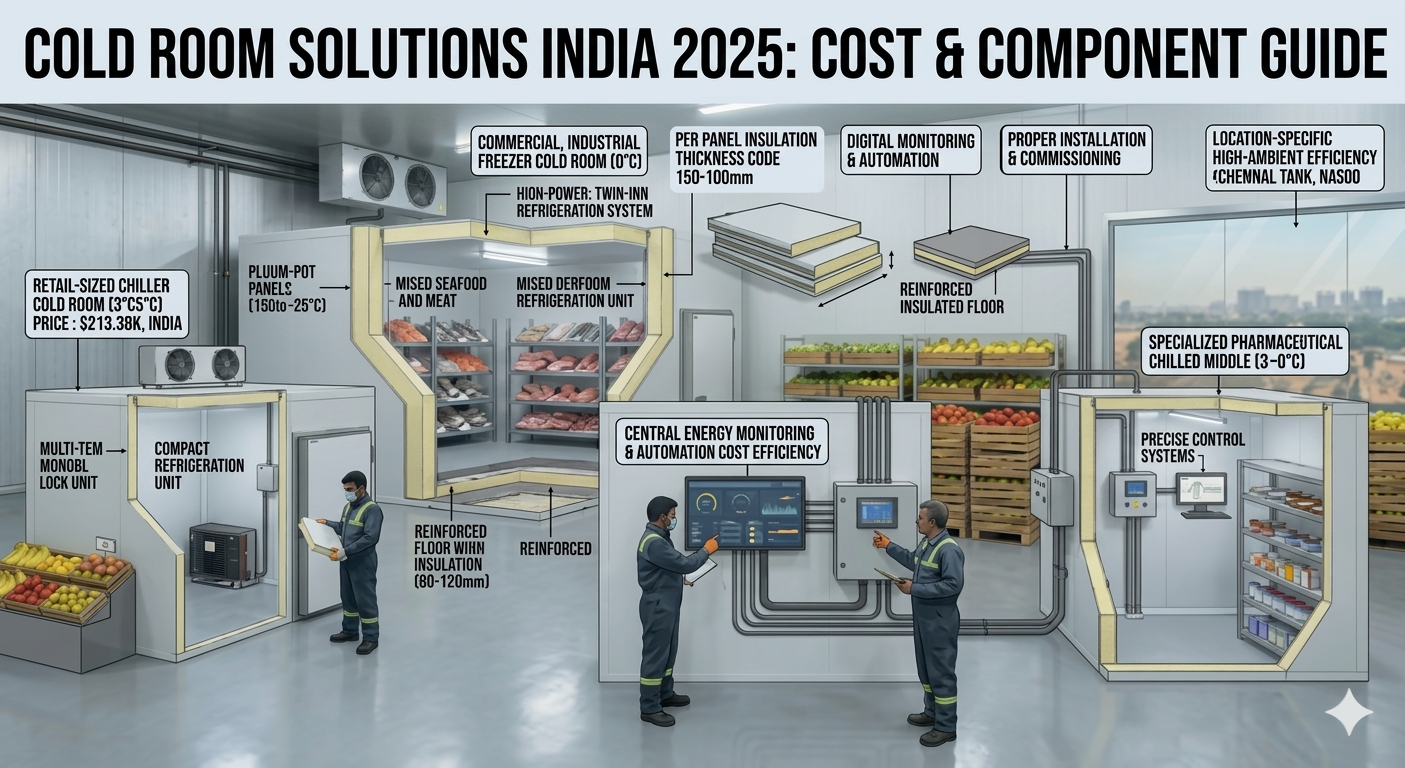
Cold room pricing in India in 2025 is influenced by several critical factors, making it important for businesses to understand both initial investment and long-term operational costs. Cold rooms are essential for storing perishable goods such as fruits, vegetables, dairy products, seafood, and pharmaceuticals. For businesses in hot regions like Madurai, selecting the right cold room system is especially crucial to ensure efficiency, durability, and cost savings.
The cost of a cold room primarily depends on its storage capacity. Small cold rooms designed for retail shops, restaurants, or small-scale storage typically range from ₹1.5 lakh to ₹5 lakh. Medium-sized cold rooms, used in commercial applications like food distribution and agriculture, usually cost between ₹5 lakh and ₹15 lakh. Large industrial cold storage systems with higher capacities (100 metric tons and above) can range from ₹25 lakh to several crores depending on the design and technology involved.
Another important factor affecting cost is the temperature requirement. Chiller rooms, which maintain temperatures between 2°C to 10°C, are generally less expensive because they require less powerful refrigeration systems. Freezer rooms, operating at temperatures as low as -18°C to -25°C, require heavy-duty compressors, thicker insulation panels, and advanced cooling systems, making them more expensive.
Insulation plays a major role in determining both cost and efficiency. Most modern cold rooms use PUF (Polyurethane Foam) panels, which offer excellent thermal insulation and reduce energy consumption. The thickness of these panels varies based on the application—typically 60mm to 80mm for chillers and 100mm to 150mm for freezer rooms. While thicker panels increase the initial cost, they significantly reduce electricity expenses over time.
The refrigeration system is another major cost component, accounting for a significant portion of the total investment. High-quality compressors, condensers, evaporators, and control systems ensure reliable performance and energy efficiency. Advanced systems with digital monitoring and automation may cost more upfront but provide better control and lower maintenance costs in the long run.
Installation and additional components also contribute to the overall cost. This includes electrical work, piping, refrigerant gas charging, control panels, and labor. Proper installation is essential to ensure optimal performance and prevent future issues. Businesses should also consider maintenance costs, as regular servicing helps extend the lifespan of the system and reduces the risk of breakdowns.
Location is an often-overlooked factor. In cities like Madurai, where ambient temperatures are high, cold rooms require more efficient cooling systems to maintain consistent internal conditions. This may slightly increase the initial investment but ensures better performance and reliability.
In conclusion, cold room pricing in India in 2025 varies widely depending on capacity, temperature requirements, insulation quality, and technology. While the initial investment may seem high, choosing an energy-efficient and well-designed system can lead to significant savings in the long run. For businesses in Madurai, investing in a high-quality cold room is a smart decision that ensures product safety, reduces wastage, and improves overall profitability in the growing cold chain industry.